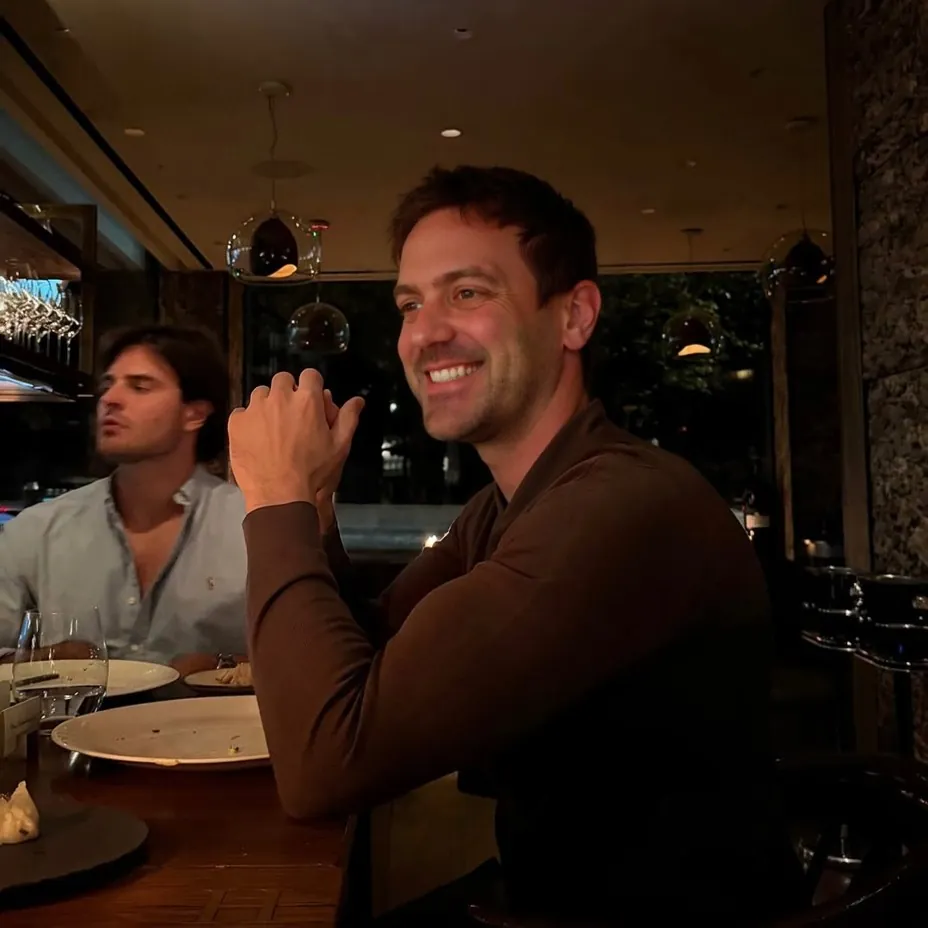
Long before I thought about businesses, teams, or acquisitions, I learned how people work together by watching my family. The lessons were not delivered in lectures. They were delivered at dinner tables, in driveways, and in the small, ordinary moments where character is actually formed.
Showing up is the job
My brother is a husband and a father, and watching him lead his own family has taught me more about leadership than most books on the subject. The most important thing he does is the least dramatic: he shows up. For the games, for the homework, for the hard conversations, for the quiet evenings when nothing in particular happens.
Teams are no different. People do not remember the speeches. They remember who was there when it mattered. A leader who is consistently present earns a kind of trust that no strategy deck can manufacture.
Children and employees share one quality: they ignore what you say and study what you do.
Fairness is not sameness
Anyone who has spent time around kids knows that treating everyone identically is not the same as treating everyone fairly. Each person needs something slightly different. One needs encouragement. One needs structure. One needs space.
Good managers learn this eventually. The best ones learn it early. When I think about the teams inside the businesses I hope to steward, I think about how to give each person what they actually need to do their best work, not a uniform policy designed for convenience.
Legacy is built in ordinary days
Family-owned businesses carry a particular weight. The founder is often thinking about their own family when they think about the future of the company: what they will leave behind, who will carry it forward, and whether the values that defined it will survive the transition.
I understand that weight because I share it. The point of building anything durable is that it outlasts you. That is true of a company and it is true of a family. In both cases, the legacy is not built in grand gestures. It is built in thousands of ordinary days handled well.
Gratitude as a practice
The holidays, the birthdays, the long tables where everyone talks at once: those moments are a reminder of what all the work is for. It is easy to get lost in ambition and forget the people who made the ambition possible in the first place.
I try not to. I am grateful for the family that shaped me, for the example my brother sets every day, and for my brother's kids, who remind me that the future is something we hand to someone else. Leadership, at its best, is simply caring for that future with intention.
— Ryan Hoek